Home
Jenasen's
Market
Market
Welcome! Here you can find all of my blog posts, where I write about anything I like including history, cooking, art, mythology, the different projects I'm up to & how to do them yourselves.
You can also find my Market Art & Goods, including Herbal Cosmetics, Art Prints, Cat Toys, and Clothing, availible for sale.Check out the Farmstand page to see updates on Farmer's Markets and blog posts about what I am making!
You can also find my Tarot videos & posts here- as well as herbal sachets if you're local.

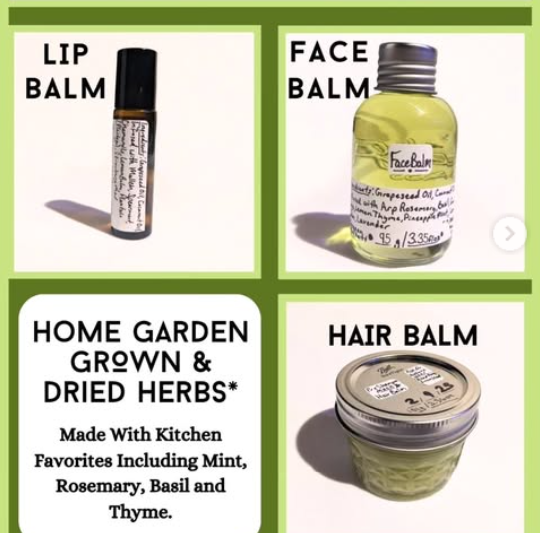
This Herbal Infused Lip Oil rehydrates chapped lips, leaving them shinny and soft! I can't see myself going back to chapstick ever again after using this incredibly smooth, natural lip oil. It is my favortite lipcare product during the cold & dry winter weather.
Check out the Herbal Lip Balm along with other my natural beauty products on the Herbs & Cosmetics tab, or at a farmer's market near you (where I just happen to be)!
'The opposite of courage is not cowardice; it is conformity.'
- 1953 "Man's Search for Himself", Rollo May

Ranked Choice Voting is a voting method that adds our rankings of all our favorite politicians to decide who wins the final vote- as opposed to using a majority-wins-all bracket method, where almost half of our voters get completely snuffed every single election. Our current system also relies on Ad Populum, a Logical Fallacy; if we don't adjust our vote to reach a majority, we don't even get to vote for the President- Congress does!
Find out where you can sign the petition to put Ranked Choice Voting on the Ballot!
Public Resoures - Agricultural Extensions,
MSU

Each US State has their own Agricultural Extension available to the public - usually through a university - to get info on local farming, foraging, gardening, & more!
My local extension is through Michigan State University!
Sept 2026 | Dying with Herbs
Humans have been adding color into their lives through natural textile dyes since at least the Neolithic Era- the New Stone Age, using minerals and materials that they found and foraged. There are many benefits that come with using natural materials to dye your fabrics, some of which -besides looking totally cute- include increasing a textile's resistance to bugs and microbes, offering slight SPF protection, and even reducing waste. The herbs, flowers, and other plants I've dyed with so far have produced beautiful, soft colors that are appealing to both the naturalist and the fashionable.
Dye Equipment
No food equipment!
Some of these materials contain heavy metals, stains, or toxins, and you should not reuse dye equipment for food.
I advise that you label your equipment and store it away from food-safe areas or items to avoid any confusion.
I am using...
1 Large Pot
1 5-Gallon Bucket
Strainer & Bowl Duo
Large Tongs
Some metals can alter your dye- so be careful to avoid copper or iron unless desired. Stainless steel and enamel are non-reactive and won't affect your dye bath.
You'll need a something large and heat resistant to contain all of your fabric and various bath mixtures, so I use a 5 gallon pot I found at the local thrift store for the stove, and a 5 gallon food-grade bucket for the "extra" materials I have during the process.
I also picked up a bowl + strainer combo at the same thrift store, which was especially helpful during rinsing. I went back for the tongs, after attempting to use a branch to stir last minute...Far too rough, by the way, it caught on everything and was not fun to use.
Scouring
You'll need to wash your fabric to remove anything that may keep the bath mixture from soaking into the fabric, like waxes or dirt. Different textiles require different souring methods to both clean and preserve the material, but you will most likely be using hot water and a fabric-specific safe detergent (perhaps dish-soap) to scrub any impurities away. Rinse any additives out thoroughly.
Mordant
In order for the color to stick, you will need to mordant your fabric. This means letting something like alum, iron, copper, or rhubarb leaves boil and dissolve for ~15-20 minutes. You'll submerge your fabric into the mix once your mordant is dissolved to its fullest- if there's some that refuses to dissolve you can use less next time (not including plant leaves)- I sometimes will save my mordant bath in a bucket (not for food use) and use it to start my next batch.
Let it sit overnight or even longer, for several days or weeks, for best penetration- just keep an eye on the mix if it's left to sit for longer than a day to avoid growing any uninvited visitors.
I primarily use Copper Sulfate, commonly used to turn pond water blue, which I bought in bulk to use for many dye baths.
I use about 1.5-2 Tbsp per bath, to saturate the materials while avoiding having particles left over.
Also, consider that the white materials will become a light blue color, but as long as you don't use too much, it should not affect the color- I've had yellows and pinks turn out just fine.
I have read that pennies can be used to add copper to the mix, and I have incorporated some rhubarb leaves into my mordant mix before...but I'll have to test those out some more to give a more definitive opinion.
The now-mordanted fabric will be added to the dye bath wet, but you may dry it and resoak it later.
Dye Material
You will need lots of your preferred material to dye with. For a pastel tint, use 1:1 dye material to fabric by weight, or use far more dye material to produce darker colors. That being said, unless you're willing to boil down your dye bath into a higher concentration, you should probably stick to less than what will fit in your pot or bucket, as you will have lots of liquid dye from all of that material.
You can use your own home-grown or next-to-home-grown materials like food scraps, garden or tree waste, an abundance of flowers- wild or otherwise, berries, or even a planted dye-garden.
You also can find foraged dyes to use. There are many plants, mushrooms, lichens- even bugs- that are perfect options for dying with. Find something that you have in abundance, and follow the general foraging rule of only taking 1/3rd, and leave the rest for reproduction, photosynthesis, and wild life.
Examples:
-Mint, Catnip,
Nettles, Purple Dead Nettle
-Dandelions
-Violets
-Goldenrod
-Oak, Walnut, Pine
-Sumac, Elderberry
I've heard it said that plants left alone in pastures by the animals are high in tannins and are great for dying with.
Dye Bath
You will need to extract the pigment from your dye material before coloring the fabric.
Place your dye material into the pot, adding only enough water for the material to float freely.
Bring the pot to a simmer, - but Not a full boil!- stir (+ lightly crush) the material occasionally for 60-90 minutes or longer.
Repeat this step to get enough dye to cover your fabric. Your materials should still have some color left to extract, but you can also add additional material to saturate the dye further.
Let the water and material sit- without the fabric- overnight for best dye results.
Dye Your Fabric
After letting it sit overnight, remove the dye material* and resimmer your dye bath for 60-90 minutes.
*If you prefer to use cheese cloth to strain the dye material after reheating or to simply leave it in the pot, you can do that also, but be aware that it may stain the end product.
If you need to resoak your dry, mordanted fabric, you should take this time to do that as well, as it will also take 60-90 minutes.
Once you are satisfied with your dye bath and soaked fabric, add the wet, mordanted fabric into the dye bath.
Stir well for at least the first ten minutes, this timeframe will be the most important to make sure your material is dyed evenly!
Let simmer for 60-90 minutes, stirring occasionally. Sediment sometimes settles onto the top of the fabric or bottom of the pot, so pay attention while positioning your fabric to soak.
Modifiers
After the initial dye bath, you can add additional pH modifiers to change the final color of your fabric. You can use things like baking soda or wood ash to raise the pH towards alkaline, or vinegar to make it more acidic.
I have found that the pH filter I have on my faucet works just fine for this step, so I usually just run my dye baths primarily using whichever pH water I prefer, no modifiers needed.
Washing
After squeezing excess dye from your fabric, rinse and wring your dyed textiles under ice cold water until it runs clear. This step takes a long time, especially if you forget to squeeze out your fabric! Don't leave your fabric to soak in the cold water. I will often also run my dyed textiles through the washing machine, as long as it's not yarn, to further clean it. Be sure to completely dry your fabrics after being wet, preferably in a location out of the direct sun, with airflow... or just use the dryer if your fabric allows.
Disposal
Some things ought to not go down the drain! Heavy metals, dirt, or lanolin from wool should not be disposed of through the pipes. Disposal often requires separating the suspended material from the water, and disposing of the solids separately from the water.
July 2026 | The Wonderful World of Sub Species
Chocolate Mint-
Chocolate mint is sweet, with a noticeable - but not biting - mint flavor. It is by far my favorite subspecies of mint, delivering just what I want from a mint for cooking, tea, and smoking. Chocolate Mint is a beautiful plant that grows quickly with dark green, inch-long-or-so leaves growing on purple stems that can be around three feet tall. It is also quite difficult to kill without trying. I love to include it in my smoothies (along with a few chunks of real chocolate).Pineapple Mint-
Pineapple mint is a bright, beautiful, and delicious sub species. Its leaves have naturally variegated edges, more so towards the top of the plant (where it will eventually flower). The leaves are an oblong oval shape, and often grow to about one to two inches. It has a delicious, light, citrus flavor with a touch of mint. I love chewing on it, drinking it as tea, and including it into my tropical smoothies. It is also brilliant to stare at on a nice afternoon.Strawberry Mint-
Strawberry Mint has a little leaf that packs a fruity, minty, absolutely delicious punch. Most leaves only grow to a half inch, but don't worry- that will be plenty enough. One little leaf will make a delicious tea. I've made candies using this tea as flavor, and it is now a fan favorite. Be careful if you're growing it in your garden - it likes to bloom early compared to other mint plants... with lots of little light pink-purple blooms.Basils-
Fresh, potent, refreshing- what would the world be without basil? Nothing quite comes close to the beloved herb, in flavor or in reverence. There are a handful of sub species of basil to choose from, and I have found that most of those varieties only vary slightly in flavor, but largely in size and appearance, including Holy, Italian, Sweet, and Purple. One sub species, though, stood out greatly to me for its spicy, peppery taste: Thai Basil. I love including it in my spaghetti sauce and on sandwiches- you can really spice up a dish with a handful of leaves, but it's also delicious in smaller amounts. It has an enjoyable kick even for those who can't handle much heat.Lavenders-
When I discovered the number of species that belong to the lavender genus, I was genuinely baffled. I had seen a variety in my local stores- English, French, Spanish- but there are roughly 47 species with 450 varieties of lavenders. I currently grow English lavender in my garden because it survives my zone 5 winters when planted directly in the ground. It's the kind of lavender you probably think of when you think of lavender. It's what you'd normally see on labels and in photos, with cute, purple buds on top of a long stem with smooth leaves below. I've also grown Spanish Lavender before, and while it is very beautiful - with large, reddish purple flowers and flower heads- it could not survive the cold, and it is more difficult to use in recipes, in my opinion.June 2026 | Drying Herbs Passively
Stay Safe and Have Fun, Gardeners!
May 2026 | Sweet Marjoram
While reading through a couple of older herb books, I quickly realized how beloved Sweet Marjoram was to the everyday cook and gardener, and that I definitely had no idea what it was. To be honest, I have seen the name before on a garden stake, and I certainly overlooked it at the local nursery, where I bought some this year. Sweet Marjoram, also known as Knotted Marjoram and Pot Marjoram received much praise throughout early botanical writing and recipes- it even has a place on Thomas Jefferson's list of "Objects for the Garden", 1794.
Sweet Marjoram has a very sweet, refreshing scent and was historically used in soaps and to flavor drinks, meats, soups, breads, and more, as well as for its medicinal benefits. It grows in beautiful spirals of tiny, pale leaves with cute, round buds that will later grow tiny white flowers. Mine lasted the whole growing season trimming the flowers off of the tall spiral branches as they appeared, only a couple of times during the summer. It handled the Michigan fall cold as well as my rosemary, meaning very well. It also didn't cause any fuss during the summer heat in the sunniest part of the herb garden.
Another name for the crowd favorite Italian herb, Oregano, is actually also called "Wild Marjoram"- and you would not believe what these old books have to say about it.
"[Oregano] flowers and leaves are strongly aromatic when crushed or dried, and the colonists used it for tea; but as a flavor herb wild marjoram does not compare favorably with the delicate annual sweet marjoram, Marjorana hortense." - (Notes on the Marjorams by Helen Noyes Webster, Pg 81 of Herbs for Use and Delight by The Herb Society of America)
The same books that held Sweet Marjoram to such a high regard talked about Wild Marjoram- Oregano- as if they'd never heard of it! It is incredible how our pallets have shifted away from one plant towards the other, and how quickly we can bring a whole species in and out of popularity within a century.
Before frost hits, one Norwegian writer recommends their traditional method of pulling marjoram by the root and hanging it to dry upside down along with the rest of their fall harvest. Herb lovers all over the world saw marjoram as a delightful favorite of their gardens, a staple plant, really.
To give credit, everyone I asked about Marjoram did say that they knew what it was, just that they had never used it nor knew how it was used. I do hope that I can see more Marjoram being called for in modern recipes, because I am very excited to start experimenting with this extremely sweet garden herb!
Apr. 2026 | The Buns

This year, we have decided to incorporate some pet bunnies into our garden plans.
Basil (grey) and Rosemary (white) will be helping us fertilize the garden, and will get plenty of fresh garden produce for it, including helpings of radishes & tops, romaine lettuce, wild spinach, and lots of herbs.
They'll be kept in our 3 seasons room during the colder months and outside when it's warm, sometime after the last frost - similar to our garden, once MI temperatures aren't dropping and rising like they're the dancing queen.
I've made a new compost bucket to store, compost, or move their soiled bedding and hay dust- just a 5 gallon with little holes poked into the bottom and the lid, lined with some paper and straw. Loose poops that can be swept up by themselves can either be tossed into the bucket as well, or immediately used in the garden; rabbit manure is cold, and does not need to be composted before using it. It can also be bagged to give or sell to fellow gardeners.
The compost bucket (or outdoor pile) needs to be kept slightly moist, and high in carbon material like paper, leaves, and/or wood chips for the decomposition process to work well and without foul odors.
Another goal I have for these two buns is to use their loose fur for needle felting. Basil is a Silver-Fox rabbit, and their 1.5-2 inch fur can stand upright by itself. Rosemary, a Californian, has a dense, short coat that can -supposedly- matt together well. I'll tell you, though, she certainly does shed a lot...
They haven't gotten used to the brush itself yet, but they've been liking the pets and the pet-safe cleaning wipes...
I plan on bagging, washing, carding, and poking their fur into cute little figurines, using Basil's speckled grey and Rosemary's white to make easy-to-see details. I may incorporate some sheep's wool for extra strength or bulk, but I'm hoping the mix of these twos' furs will produce some good results.
Sliver-Fox and Californian rabbits are also well-suited to my climate, and a similar size to one another - about 10lbs. If they were any bigger, they would not fit in this hutch we got for them very well, together...
I'll be posting an update on their outdoor set-up. We have plans on making a new frame for their tray to go under their hutch this week, as well as decking out their new run- for safety! And drainage!
Jan. 2026 | Neem Powder Toothpaste


Find my available artwork, including various sizes of prints, in the Art & Decor tab here on my blog!
Oct. 2025 | þ - "Thorn"
You may recognize 'þ' if you've ever used runes before.
As a rune, it symbolizes force as its raw, primal nature.
Its origins are found in the oldest Germanic runic alphabet -
the Elder Futhark - and remained relevant into Old and Middle English
after being introduced through the immigration and language of the
Anglo-Saxons. It is the letter for the 'th' sound we all appreciate
but have always thought was kind of weird. þ! How wonderful! Only
English and Icelandic use the 'th' sound to this day, but whatever
happened to the character?
In the time of transcribing monks, the calligraphy style they used
often made the thorn symbol appear to be the letter 'y'. This led to
the familiar phrase "ye old"... We still use this mistake when we want
to allude to earlier times- like on kitschy store decor!
þ was falling out of fashion until the printing press killed it.
A new, 1837 German invention, the press did not contain the letter þ,
as the sound did not exist in the modern German language. That's when
the two letters 'th' took the place of 'þ' forevermore...
I think we should bring it back. It's none of the Germans'
business what letter we use to make our 'th' sound, and we don't depend
on their technology for printing now, anyways. It perfectly fits into
the pattern of 'b' & 'p', shaped to fit right between the two in visuals
and in physical mouth movement. I have yet to meet anyone who thought
'th' was a good idea, yet have had the conversation about how odd it is.
Bring back þ! Be þe revolution!


I have been having so much fun making these cute little cat toys!
If you're interested in purchasing any, visit the Clothes & Sewing tab!
If you have a design request, I would love to see what I can do for you!
Oct. 2025 | Fish & Parsely
This 'One-Pot' recipe is heavily inspired by a wild game recipe I found at an estate sale. It originally calls for catfish, and just way too much butter- but it is very versatile and easy!
Ingredients
Fish of Choice - The original recipe calls for 2lbs of Catfish;
I usually use a few filets of pollack.
Parsley - 1/3 to 2/3 Cups of Fresh Chopped Parsley.
If you want to use dry parsley, use only 1/3 of
the weight suggested for fresh herbs- and crush them thoroughly!
Butter or Cooking Oil - ~3 Tbs
Mushrooms - 1-2 Cups
Salt - 1 Tsp
Pepper - 1 Tsp
Optional - Spinach - ~1 Cup
If you're using fresh mushrooms, they will take more time
and release more water while cooking- meaning you may
want less butter in order to cook them fully!
Sometimes, I partially substitute the Parsley with another herb
like Dill, Thyme, or Oregano, depending on how I feel that day.
The pores of a metal pan will close when heated before use- it is ready to use when water immediately beads and can quickly travel around the pan like a marble. This is particularly useful for frying food. Butter is at temperature for frying when thin, white smoke can be seen coming from the surface.
How to Cook
This meal is great with a bit of Parmesan or cottage cheese. It's absolutely perfect for an easy, at-home meal without much fuss.
I hope you enjoy this meal as much as I have!
Happy Cooking!
Oct. 2025 | BII
My mom found out she had 4 types of breast cancer when she was still in her 30s, and I was in middle school. Her chemo treatments were not kind to her, leaving her physically and mentally disabled after overtreatment. But that was only the end of the beginning... She, like many other breast cancer patients, was not advised on the dangers of getting silicone breast implants, despite the most vulnerable being exactly like her: having pre-existing autoimmune conditions, heart issues, or recent surgery, just like it says on the black box warning label.


I make Tarot Videos & Posts
that you can check out on the Tarot tab here on my
blog! They are also availible on my
Youtube &
JM Messages Instagram page!
Writing is my favorite way to deliver tarot messages bcause I feel like I can
pack more meaning into one post.
Herbal Infusions expand the horizon on how we use our favorite herbs in our food.
What herbs do you want to further integrate into your cooking? Will it be Savory? Sweet? Spicy?
There are many uses for garden-herb-infused butter; everything from desserts to breads- if the recipe uses butter or oil, you can infuse your herbs of choice to bring a delicious twist to your treats.
This works perfectly with box options if you don't want to bake from scratch, and it is very easy for all skill levels to make.
This spicy goodness will have you wondering why you don't infuse herbs into every recipe.


About the Farmstand
Permaculture is the main focus of my business; my products are made using second hand fabrics, natural materials, and local sources - and of course, clearance items!! I do have somewhat of an exception for artwork because I do want you to love that forever <3 (and sometimes you do end up saving some perfectly useful materials from the landfill).
My products use materials like glass, rubber, and cotton packaging that are from the Earth and can easily be returned to it when its lifetime is up. I prefer to use metal or wooden displays over plastic - and they are all second hand (Thank You Joanne's!)- except for the hangers... I choose the food products I make to avoid waste as well, like making hard candies or dehydrating foods to keep them good to eat for much longer! I also find multiple uses for my herbs, like dying fibers with lower quality plants and using many leftover stems for a fertilizer called "weed soup" - ( just plant material and water), which is full of nutrients for the garden.
I love to experiment with different art mediums, including pen, paint, photography, & glass etching, among many others... I also love drinking tea and cooking with herbs - even my glass of water can't go unseasoned! I'm fascinated by the natural world and its abundant resources and interesting affairs, which I hope to share with you all!
About Me
Hi! I'm Jenasen, the owner of this blog! Welcome, and let me tell you a
bit about myself... I am 23 years old ( as of writing this ), I love the
arts and the outdoors, as well as video games and, mainly nonfiction,
books. I have been making art since middle school, when I learned how
to create a portrait through body art and makeup tutorials (Shout out
to MadeYewLook on YouTube!). I learned how to code in AP Computer
Science, and I won my Class Senior Awards for both Art and English
during High School. Now I am coding my own websites - this blog here,
and a social media site centered around writing (details pending!).
I'm also writing a few nonfiction books of my own and creating a tarot
deck, designed to be easy for new users.
In the future, I hope
to build a straw bale home - A natural & passive style home that, if
made correctly, should save me money on the house and on the bills,
work super efficiently, and avoid adding to the used construction
material occupying 40% of the USA's landfills, as well as the 40% of
carbon pollution that real estate releases around the world.
My dream home would be on my dream permaculture homestead, where I
grow my crops in the forest & alongside helpful livestock to get better
harvests, nutrients, and fertilizers while getting as much out of my few
acres as possible. (I'm thinking the barns and sheds are going to be a
breeze, financially, although they may take a few years to fully
complete.)
I'm hoping this permaculture farm will be a place
to study and document (take pictures & draw) the natural environment as
well as to continue to innovate the way we farm, and will introduce that
innovation to others.
I've only played the magic classes in Skyrim, I'm reading a book
about making a sweater from scratch, and Leonardo Da Vinci is my favorite
person, ever. I hope you enjoy my new blog, I'll be trying to publish at
least every two weeks, which seems like a reasonable goal for now. <3 :)
.png)
.png)
.png)


New Website Coming Soon!...